Mail Merge For Mac
Mail Merge for Mac - Labels - Office 2008. EASY Photo Transfer to Wood - Fast, Clean, REUSABLE, Cheap Print on Wood Using Mailing Labels - Duration: 7:18. TheCrafsMan SteadyCraftin 713,297 views. Under the Mail Merge Manager toolbar/window (if not visible then check Tools -> Mail Merge Manager) expand '3. Insert Placeholders' 5. Now drag the field containing your filename to the right place in the INCLUDEPICTURE field i.e. In between the last / and the close '6.
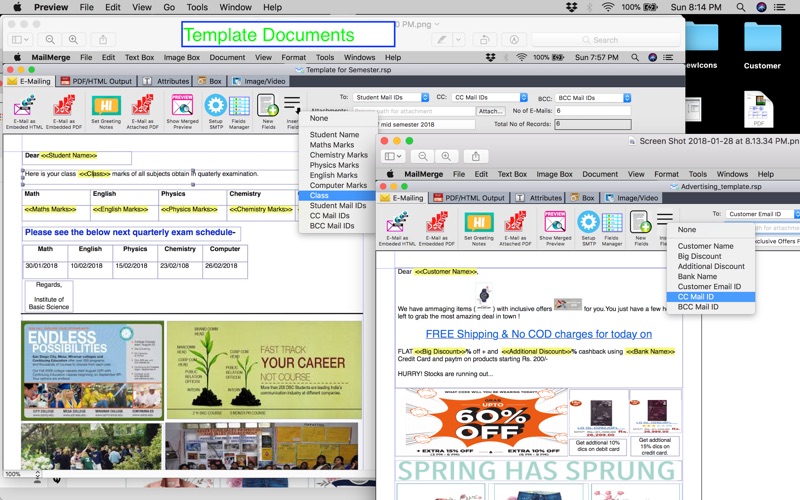
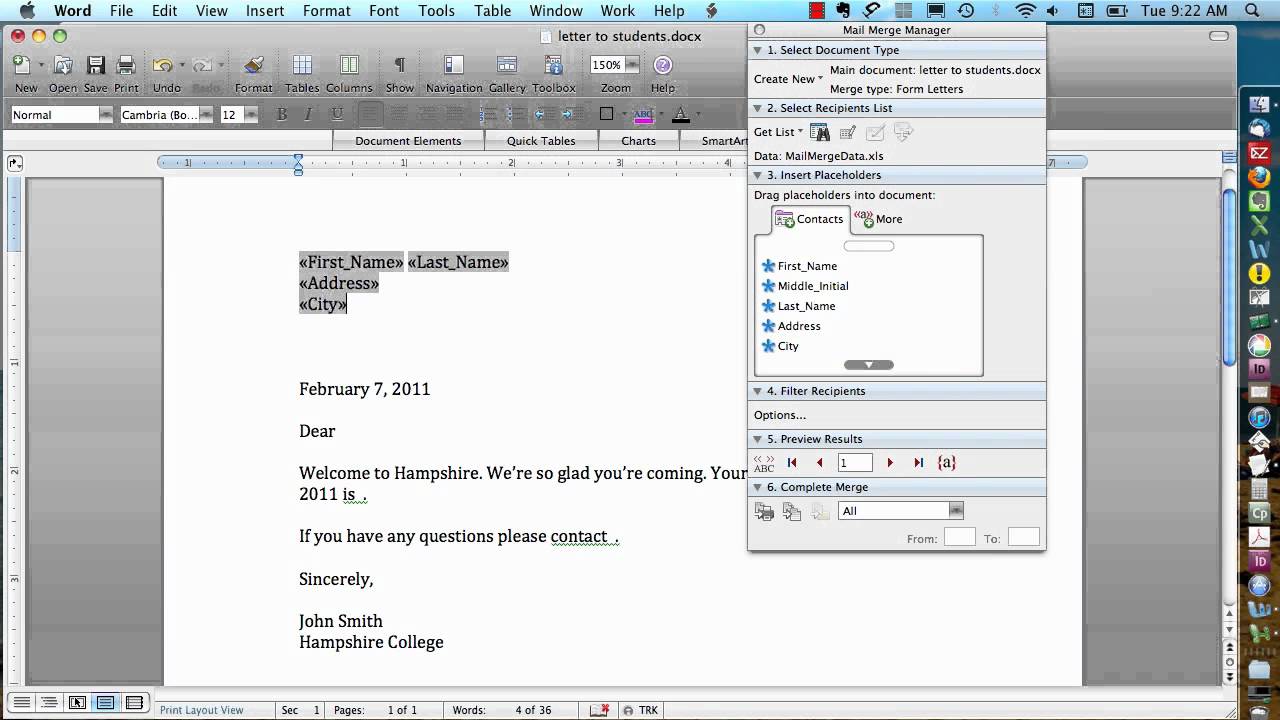
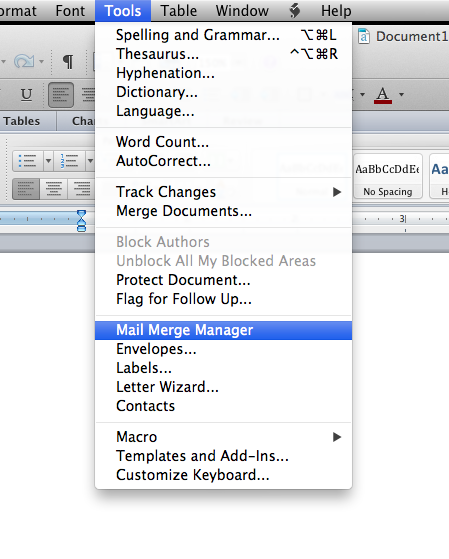
Mail Merge Options - OS X Mail Merge is an absolute godsend when it comes to printing labels and sending mass emails. The feature isoffered by many office applications and connects either an address book application or spreadsheet filled with contacts and pulls their information into a label or email, in turn making it so you don't have to manually copy-and-paste hundreds of contacts into a template by hand. There are a ton of applications for OS X that support Mail Merge, so we've written this article showing some of the best Mail Merge solutions for Mac and how to use them. Office for Mac (Labels) The latest version of Office for Mac - Office 2011 - has great Mail Merge support. Using Microsoft Word, you can link an existing Excel document containing contact information to a Word document, allowing you to pull contact data into labels, letters, and envelopes. To start, launch Microsoft Word on your Mac and click into the Tools menu from the Apple toolbar. Select Mail Merge from the drop down menu and a Mail Merge pop-up menu will appear.
The Mail Merge popup menu has a ton of options that will make for an easy data import from Excel. From this menu, click the Create New button to start a new Mail Merge. You'll be prompted to select a document type: a letter, label, envelope, or catalog. For this tutorial, we'll be using labels Select the printer you’ll be using to print these labels under the Printer Information option and the type of paper you’ll be using in the Label productsoption. Under the second option — “Select Recipients List” — click the Get List button and select Open Data Source from the drop-down menu. You’ll then be prompted to select your Excel document containing addresses from your Mac’s file structure.
You can now customize the rest of the options as necessary: adding placeholders, filters, and customizing other options. Press the Return key on your keyboard to initiate the Mail Merge, and voila! You can view your labels within the document and print by pressing Command-P on your keyboard. LibreOffice (Envelopes) LibreOffice is a free office suite for Mac, PC, and Linux. The suite has n very easy-to-use Mail Merge Wizard that can be used to make quick and easy envelopes. To access this wizard, click on the Tools button from the task-bar and select Mail Merge Wizard from the drop-down menu.
The wizard will then guide you through importing a document to Mail Merge. From the start screen, you can select how you'd like to start your labels: from scratch, from an existing document, or from a template.
We will be creating a new document in this article. From the second screen, select Letter and press the Next button. From here, you can import your address spreadsheet by clicking the Select Different Address List. Button from the upper right-hand corner of the screen. You will then be prompted to select your spreadsheet from your Mac’s file-structure.
You can format your labels from the center of the screen. LibreOffice will suggest two address layouts by default in previews shown at the center of the window. More presets and editing options are available in the More menu that is located to the right of the two defaults. Looking towards the bottom of the screen, you'll see a preview of your envelope.
You can make changes to the formatting by clicking on the Match Fieldsbutton from the center of the window. From here you can edit what columns in your spreadsheet correspond to what part of your label. You can now click through the rest of the settingsand your envelope templates will output to the newly created document. You can then print your labels by going File - Print.
Unfortunately, LibreOffice labels will only print as full envelopes. To use WorldLabel or other custom label templates with LibreOffice, you have to setup databases. We've explained how to do this in an earlier post on the. MailMergeApp (Email) If you're looking for a lightweight email-based Mail Merge app, MailMergeApp is just what you need.
This $10 Mac application automatically links your Mail.app connected email addresses, making for seamless Mail Merge for email lists. After launching the application you can type an email body and title in the center of the app. You can set which groups will receive this email and which email address the email will sent from using the left-most and center drop-down menus located towards the bottom of the window. To use Mail Merge to add recipient information to the email, use the right-most drop-down menu to select what field you'd like to add.
The information will be added to wherever your text-selector is currently placed. Finally, click on the Merge button when you're ready to select email recipients. MailMergeApp will automatically pull in contacts from your selected group. Clicking through these contacts will bring up a preview of the email in the center of the window. Finally, you can send the email by clicking the Send button. Labels and Addresses (Design) Labels and Addresses is a $30 Mail Merge application for Mac that has built-in design tools. You can use the application to create beautiful label and envelope designs and apply Mail Merge information to them.
After launching the application, you'll be brought directly to the Design tab. From here you can select from a variety of pre-made label, card, and envelope designs.
Double click on a design, and it will open a new window where you can start using Mail Merge. From the sidebar, you'll see all of your Mac's contacts. Clicking on a contact will automatically bring the person’s information into the label queue.
You can select multiple contacts by Command-clicking multiple contacts. When you're ready to print the queued labels, select the Print button from the upper right-hand corner of the window and a print screen will appear.
Additionally, you can use one of the application's built-in label templates to create label, envelope, and postcard designs from scratch. When at the home-screen, click into the Labels, Envelopes, or Postcards menu — all of these are located to the right of the Design button. When in these menus, you can select which label template you'd like to use to create your new design.
Labels & Addresses has hundreds of templates built-in, including templates for Avery and DYMO labels amongst other brands. Wrap-Up And that concludes WordLabel's Mail Merge application roundup! Let us know what Mail Merge app you’re using in the comments.
Recently I had to create a lot of documents based on the same template, so I decided to use. Unfortunately when you generate a document from a defined Mail Merge template in Word, you end up having all the pages inside one huge document. But I wanted to have each form in a seperate word document.
To achieve this non-standard behavior, I wrote a little helper: execute the following VBA Macro on your Office Word Mail Merge template to have Word generate & save every record into a single file. Attention. Unfortunately this Macro does not work with Microsoft Office 2010+ on Windows! (Reason is the next point #2). There is one thing to do manually, because I couldn’t solve it programmatically: you have to manually set the “Mail Merge Output” setting to “Current Record”! (default is “All”) Here’s the VBA code for the Macro: Alternative approach An is to split the generated mail merge document based on the section breaks that Word inserts when executing mail merging. For me this was not working because of special formatting and tables inside the tempalte document.
Mail Merge For Mac Word 2016
First let me give credit where credit is due because I know absolutely nothing of writing macros. In fact this is my first attempt at using a macro let alone modifying the code. Armed only with 24 year old knowledge of Basic (yes the original, not Visual Basic) and Fortran (no not the punch card Fortan but really close) I took Mr.
Raduner macro above, Remou macro code for producing pdf’s at the following link, and a few others and combined different aspects and PRESTO!!! I clearly got very lucky but it works in MS Word 2010. Hope it works for everyone else as well. I’m loading both individual pdf creator and individual word file creator. Raduner will work his magic, clean this up and make it more user friendly for everyone else as he clearly knows way more than I do. I’ve just used your original code in Word2010, and many thanks for putting it together. I looked for quite a while for something clear and simple.
While my last programming was in Basic (before QuickBasic even), I did manage a simple improvement which seems to avoid the whole “current record” issue. You can leave it set to “All”. All of my individual documents appeared the same when opened, which forced me to try this: With ActiveDocument.MailMerge.DataSource.FirstRecord = rec.DataSource.lastRecord = rec.Destination = wdSendToNewDocument.Execute End With The DataSource.FirstRecord and lastRecord pointers (probably the wrong term) are all that I put in there, and now the rec variable insures that I get the right record. Works great now. The only other change I made was to hard-code the filepath since I wasn’t getting any kind of prompt.
Anyway, maybe someone else can profit by this. Oliver, In other words, I used the code you show at the top as-is, with only the addition of two lines. I’m running W7, Word 2010. Original: ‘ Execute Mail Merge action With ActiveDocument.MailMerge.Destination = wdSendToNewDocument.Execute End With Modified: ‘ Execute Mail Merge action With ActiveDocument.MailMerge.DataSource.FirstRecord = rec.DataSource.lastRecord = rec.Destination = wdSendToNewDocument.Execute End With I don’t think the problem you mention at the top is a problem anymore. Can you verify?
Hey tried the code you posted on December 6 for single PDF files. I cannot run it as it gives me an error in this part docLetters.ExportAsFixedFormat OutputFileName:= savePath & sFName & “.pdf”, ExportFormat:= wdExportFormatPDF, OpenAfterExport:=False, OptimizeFor:= wdExportOptimizeForPrint, Range:=wdExportAllDocument, From:=1, To:=1Item:=wdExportDocumentContent, IncludeDocProps:=True, KeepIRM:=TrueCreateBookmarks:=wdExportCreateNoBookmarks, DocStructureTags:=TrueBitmapMissingFonts:=True, UseISO190051:=False docLetters.Close False I am using Windows for mac. Anyone an Idea?
I am helpful for every hint. Cheers Giovanni. Thanks, this post was very helpful. In my case i had to customise the macro script a little in order to save the documents as PDF’s instead. I changed two sections in the script as below: First replace both appearances of.docx with.pdf so the exported files have the correct file name extension: strDocName = “document” & rec & “.pdf” Else strDocName = ActiveDocument.MailMerge.DataSource.DataFields(docNameField).Value & “.pdf” Then add the bit that let’s Word know to export as a PDF: ActiveDocument.SaveAs FileName:=savePath & strDocName, FileFormat:=wdFormatPDF. Hi, What do I change in the macro to save the file name using fields within the form?
I read that I could either stipulate that using: 1. The actual merge field within the document: and OR 2. The line on which the text sits on: so if my and field sits on the 3rd line of the document. Sub BreakOnSection ‘ Select a folder Dim strFolder As String Set fd = Application.FileDialog(msoFileDialogFolderPicker) With fd.Title = “Select the folder into which the documents will be saved.” If.Show = -1 Then strFolder =.SelectedItems(1) & “ ” Else MsgBox “The documents will be saved in the default document file location.” strFolder = “c: ” End If End With ChangeFileOpenDirectory strFolder ‘Used to set criteria for moving through the document by section. Application.Browser.Target = wdBrowseSection ‘A mailmerge document ends with a section break next page. ‘Subtracting one from the section count stop error message.
For i = 1 To ((ActiveDocument.Sections.Count) – 1) ‘Select and copy the section text to the clipboard ActiveDocument.Bookmarks(“ Section”).Range.Copy ‘Create a new document to paste text from clipboard. Documents.Add Selection.PasteAndFormat (wdFormatOriginalFormatting) ‘Removes the break that is copied at the end of the section, if any.
Selection.MoveUp Unit:=wdLine, Count:=1, Extend:=wdExtend Selection.Delete Unit:=wdCharacter, Count:=1 DocNum = DocNum + 1 ‘ ActiveDocument.SaveAs FileName:=”test” & DocNum & “.doc” ActiveDocument.SaveAs ActiveDocument.Close ‘Move the selection to the next section in the document Application.Browser.Next Next i ActiveDocument.Close savechanges:=wdDoNotSaveChanges End Sub.